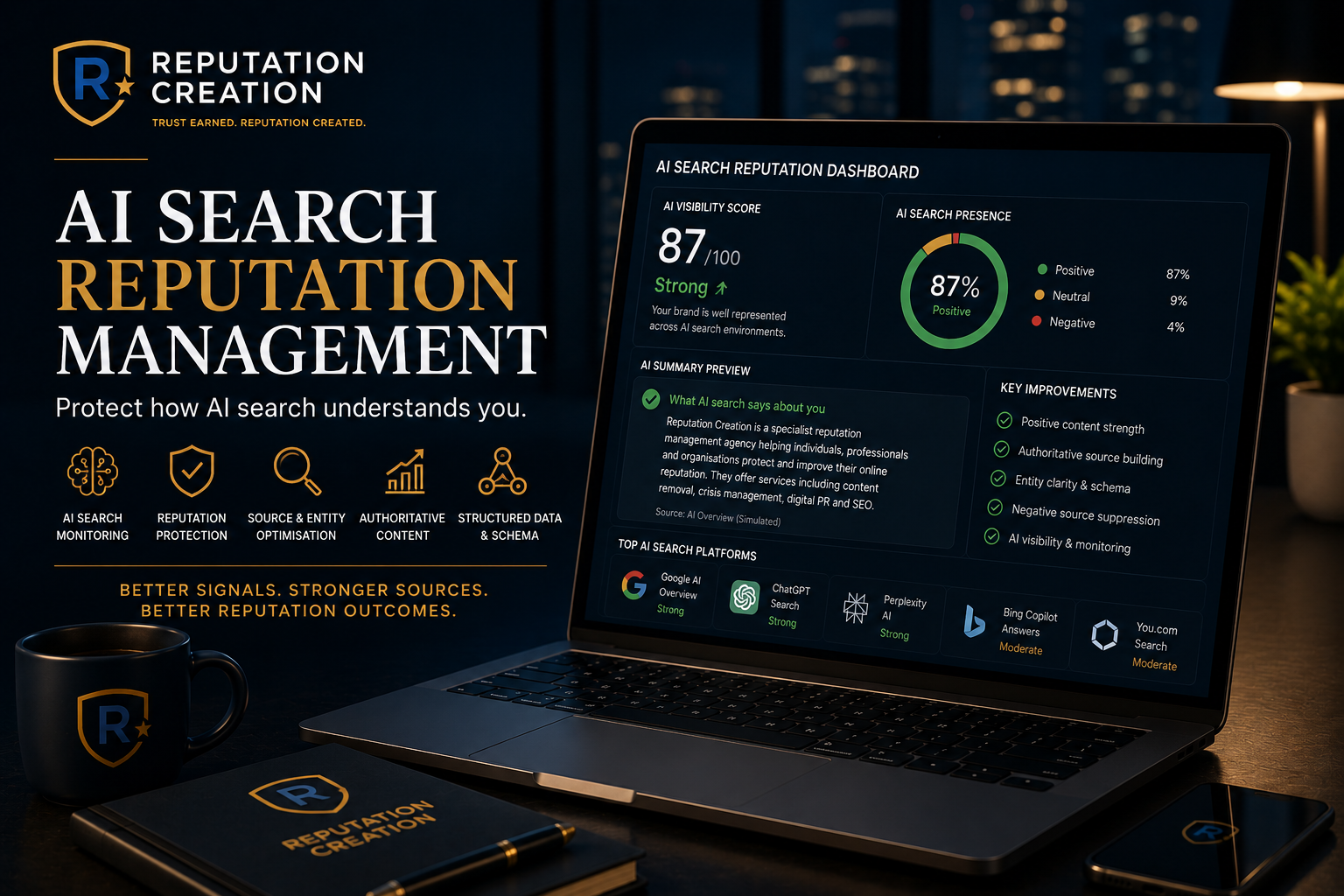
AI Search Reputation Management
Protect How AI Search Understands You
Reputation management for the new search landscape. We help individuals, professionals, brands and organisations improve how they are understood, summarised and represented across Google AI results, ChatGPT-style search, AI answer engines and emerging discovery platforms.
AI search can repeat, summarise and amplify reputation issues.
When AI systems rely on outdated, weak or negative sources, they can create summaries that shape trust before anyone clicks a result.
Our focus:
strengthen the sources, structure and authority signals that help AI systems understand the right version of you.
The New Search Reality
People are no longer only reading search results. They are reading AI summaries.
Traditional Google results still matter, but the way people discover information is changing. Search engines and AI platforms increasingly summarise people, brands, companies and issues before a user ever visits a website.
That creates a new reputation challenge. If AI systems pull from outdated articles, weak profiles, negative sources, unclear websites or poorly structured content, the answer they generate may be incomplete, misleading or damaging.
At Reputation Creation, we help clients strengthen the online signals that AI search systems may use to understand who they are, what they do and which sources should be trusted.
Why It Matters
AI answers can influence reputation instantly.
When someone asks an AI tool about a person, company, founder, professional or brand, they may receive a direct summary instead of a list of links. That summary can shape perception quickly.
If the available online information is thin, outdated, unclear or dominated by negative sources, AI search may not have enough positive, accurate and authoritative material to work with.
AI Search Reputation Management focuses on improving the source landscape, entity clarity, content quality, structured data and authority signals that support better representation across emerging search experiences.
What We Help With
AI reputation issues are usually source issues.
AI systems do not invent a reputation from nothing. They rely on available information, recognised entities, trusted sources, structured content, search visibility and repeated signals across the web.
If those signals are weak or unbalanced, the output can be poor. Our work focuses on improving the underlying online ecosystem so AI systems have better information to interpret.
- Incorrect AI summaries that describe a person, brand or organisation inaccurately.
- Outdated reputation signals being repeated by AI answer engines.
- Negative source dominance where AI pulls from damaging or unbalanced results.
- Weak entity understanding caused by unclear websites, profiles or structured data.
- Poor brand clarity where AI cannot confidently understand services, leadership or positioning.
- AI search visibility gaps where positive assets are not strong enough to influence answers.
AI Search Reputation Services
A modern reputation strategy for AI-driven discovery.
AI reputation work combines traditional reputation management, SEO, entity optimisation, structured data, content strategy, digital PR and monitoring. The aim is to help search engines and AI systems understand the most accurate, trusted and current version of you.
AI Reputation Audit
We review how a person, brand or organisation appears across search results, AI-style answers, source pages, profiles and public information.
Entity Optimisation
We improve the clarity of who you are, what you do, where you are represented and which sources should be understood as authoritative.
Structured Data & Schema
We use structured data to help search engines understand services, people, organisations, FAQs, content relationships and reputation assets more clearly.
Source Content Improvement
We strengthen websites, profiles, biographies, articles and supporting content so AI systems have better source material to interpret.
Digital PR & Authority Signals
We create and strengthen credible third-party assets that support trust, search visibility and AI reputation understanding.
AI Search Monitoring
We monitor search results, visible sources, AI-facing content and reputation risks so improvements can be tracked and maintained.
AI + SEO + Reputation
AI reputation work starts with the sources AI may trust.
AI search reputation management is not about forcing an answer. It is about improving the evidence, clarity and authority of the information available online.
That means strengthening the assets AI systems may use: official websites, profiles, biographies, knowledge-style information, structured data, media coverage, FAQs, service pages, interviews, directory profiles, review signals and trusted third-party references.
The better the source landscape, the better chance AI systems have of presenting an accurate, balanced and current reputation picture.
Our AI Search Reputation Process
A structured route to better AI understanding.
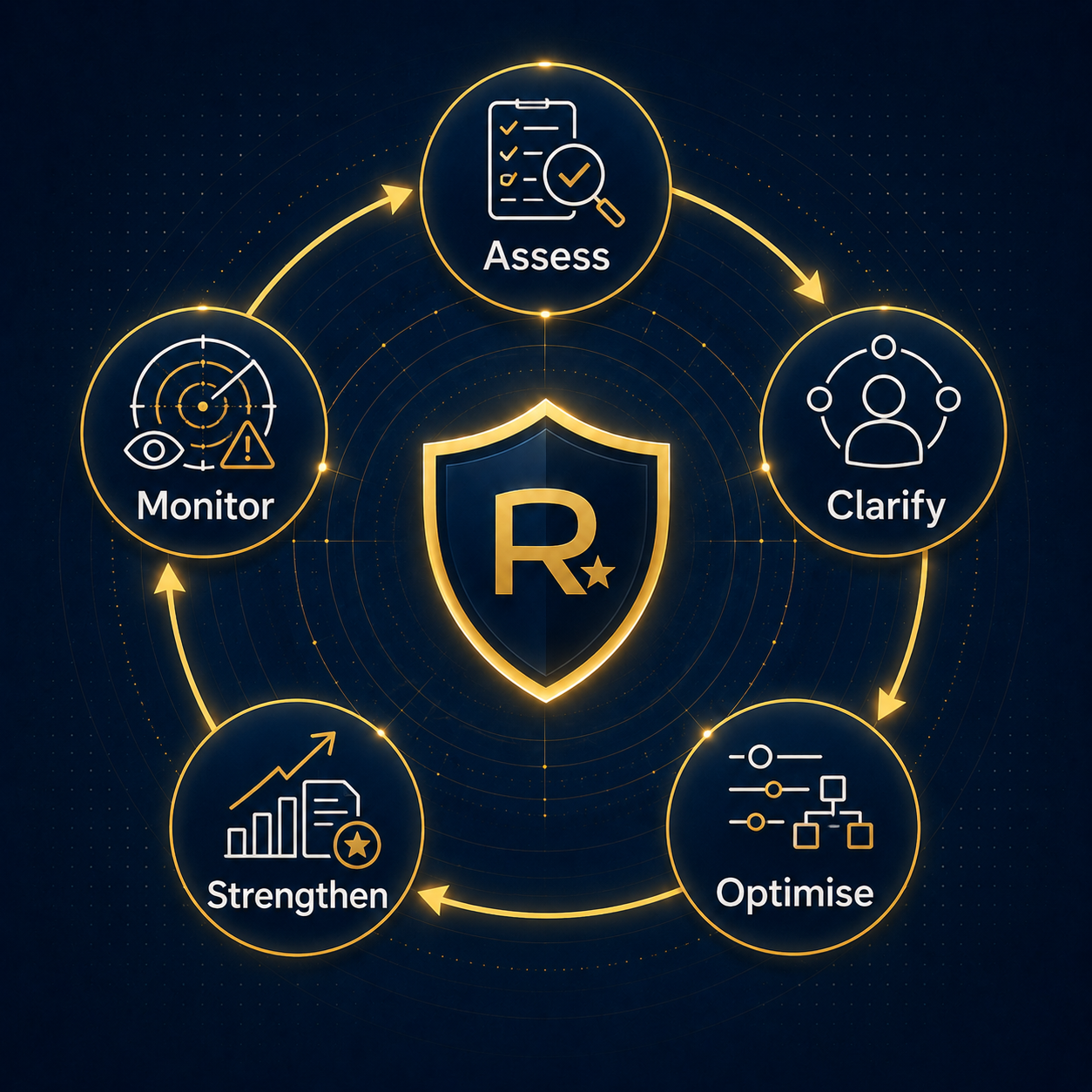
AI reputation work is still an emerging discipline, but the fundamentals are clear: improve the sources, clarify the entity, strengthen authority and monitor how the online picture evolves.
01
Audit
We review search results, AI-facing content, profiles, source pages and visible reputation signals.
02
Clarify
We improve entity clarity so search engines better understand the person, brand or organisation.
03
Structure
We improve schema, FAQs, content relationships and website signals to support clearer interpretation.
04
Strengthen
We build positive assets, authority content, profiles and digital PR signals to improve the source landscape.
05
Monitor
We monitor reputation movement, source visibility and emerging AI search risks over time.
Who This Helps
AI search reputation matters wherever people ask before they decide.
As AI search becomes more common, more people will ask direct questions before choosing who to trust, contact, hire, invest in or work with.
That makes AI reputation important for anyone whose name, brand, company or professional profile may be researched online.
- Public figures affected by AI summaries based on old or unbalanced sources.
- High net worth individuals concerned about privacy, visibility and source accuracy.
- Entrepreneurs and founders preparing for due diligence or investment conversations.
- Professionals in financial, legal and medical sectors where trust matters.
- Brands and companies that need AI systems to understand their services accurately.
- Organisations affected by outdated, unclear or negative source visibility.
Important Reality
AI search cannot be controlled directly, but it can be influenced responsibly.
No agency can guarantee exactly what an AI system will say. AI answers are influenced by many signals, sources and system behaviours that can change over time.
But you can improve the information environment around your name, brand or organisation. Better content, clearer structure, stronger authority and more accurate sources all support better understanding.
Better sources. Clearer signals. Stronger reputation foundations.
AI Reputation Assets
What we may build or improve.
AI systems need clear and trusted source material. The right assets depend on whether the campaign is personal, professional, corporate, brand-led or crisis-related.
01
Entity Hubs
Official websites, profile hubs and controlled pages that clearly explain the person, brand or organisation.
02
Structured Data
Schema and content relationships that help search engines understand services, people, organisations and FAQs.
03
Authority Content
Articles, profiles, interviews, FAQs and thought leadership that provide better source material.
04
Third-Party Signals
Credible external references, digital PR, profiles and mentions that support trust and entity confidence.
FAQs
AI Search Reputation Management FAQs
Common questions about AI search, answer engines, reputation summaries and improving how AI systems understand a person, brand or organisation.
What is AI Search Reputation Management?
AI Search Reputation Management is the process of improving how a person, brand or organisation is understood and represented by AI-driven search systems, answer engines and search summaries. It focuses on source quality, entity clarity, structured data, content accuracy, authority signals and monitoring.
Can you control what AI search says about me?
No agency can directly control every AI answer. However, the information environment can be improved by strengthening accurate sources, structured content, profiles, authority assets and the signals AI systems may use to understand a person, brand or organisation.
Why do AI tools sometimes give inaccurate reputation summaries?
AI tools may give inaccurate or incomplete summaries when they rely on outdated, weak, unclear or unbalanced sources. If positive, accurate and authoritative information is limited, AI systems may place too much weight on negative or misleading content.
How does SEO help AI search reputation?
SEO helps by strengthening trusted, accurate and well-structured content in search results. AI search systems often rely on visible, authoritative and well-understood sources, so SEO remains an important part of improving reputation visibility.
Does schema help AI search reputation?
Schema can help search engines understand key information about a person, organisation, service, FAQ, webpage or content relationship. It is not a magic fix, but it supports clarity and can form part of a wider AI search reputation strategy.
Can AI Search Reputation Management help brands?
Yes. Brands can benefit when AI systems need clearer information about services, leadership, values, trust signals, reviews, media coverage and what the brand should be known for.
Is AI Search Reputation Management confidential?
Yes. AI search reputation issues are handled discreetly, especially where the issue involves personal reputation, privacy, commercial sensitivity, professional standing, negative sources or public scrutiny.
Future-Proof Reputation
Worried about how AI search represents you?
We can review your current search landscape, visible sources and entity signals to identify where AI systems may be getting their understanding from.
Clearer sources. Stronger signals. Better reputation foundations.
Reputation Beyond Google
AI search is becoming part of the reputation landscape.
If AI systems are likely to influence how people understand you, your brand or your organisation, now is the time to strengthen the sources they may rely on.